
Views: 229 Author: Site Editor Publish Time: 2025-11-29 Origin: Site


Holiday lights have become an integral part of celebrating the festive season, adding sparkle and joy to homes, businesses, and public spaces. Among the many lighting options available, LED and incandescent holiday lights are the two most popular choices. Each type offers distinct advantages and drawbacks that can affect your decision, whether you're decorating a small tree or illuminating an entire house. Understanding the differences between LED vs incandescent holiday lights is crucial for selecting the option that best suits your needs, preferences, and budget.
In this comprehensive guide, we will explore the key differences between LED and incandescent holiday lights, compare their efficiency, lifespan, cost, aesthetics, and environmental impact. We will also provide practical advice to help you make an informed decision for your holiday lighting needs.
When comparing LED vs incandescent holiday lights, the most important factor to consider is the technology behind them. Incandescent lights are the traditional holiday lights that have been in use for decades. These lights work by passing electricity through a filament, which heats up and produces light. On the other hand, LED (Light Emitting Diode) lights are a newer technology that emits light when an electric current passes through a semiconductor material.
While incandescent lights have a warm, nostalgic glow, LEDs offer a range of benefits that are worth considering for modern holiday displays. Understanding the key differences between these two types of holiday lights will help you choose the one that best fits your needs.

One of the most significant factors when choosing holiday lights is energy consumption. LED lights are far more energy-efficient compared to incandescent lights, making them a better option if you are concerned about electricity bills or environmental impact.
Incandescent lights are known for their energy inefficiency. They use a significant amount of electricity to produce light, but much of that energy is wasted as heat. This means that while you get light from an incandescent bulb, a large portion of the energy is lost as heat, leading to higher energy consumption.
LED lights, on the other hand, use up to 75% less energy than incandescent lights. This is because LEDs convert most of the energy they consume into light, rather than heat. As a result, LEDs are not only cheaper to run, but they also help reduce the environmental impact of your holiday decorations.
| Light Type | Energy Consumption | Efficiency |
|---|---|---|
| Incandescent | High | Low |
| LED | Low | High |
Another key consideration when comparing LED vs incandescent holiday lights is their lifespan. No one wants to replace their holiday lights every year, so understanding how long each type will last is crucial for both cost and convenience.
Incandescent bulbs have a relatively short lifespan, averaging about 1,000 hours. These bulbs are more prone to burn out quickly, especially when subjected to the temperature fluctuations common in outdoor environments during the holiday season. The filament inside incandescent bulbs can easily break, making them more fragile.
LED lights, in contrast, are much more durable. They can last up to 25,000 to 50,000 hours, which is significantly longer than incandescent bulbs. LEDs are also more resistant to breaking, making them ideal for both indoor and outdoor holiday displays. Due to their longer lifespan, LED lights require far fewer replacements, saving you both time and money in the long run.
When selecting holiday lights, the initial purchase price is often a major consideration. However, it's important to balance upfront costs with long-term savings. Let’s take a closer look at the cost comparison between LED and incandescent holiday lights.
Incandescent holiday lights are generally less expensive to purchase upfront. They are widely available, and you can find them in various shapes, sizes, and colors. However, the savings on the initial purchase price may be offset by their higher energy consumption and shorter lifespan.
LED holiday lights come with a higher upfront cost. However, the price of LEDs has been steadily decreasing, making them more affordable in recent years. The higher initial investment in LED lights will pay off over time due to their energy efficiency and long lifespan.
LED lights save you money in the long run by using less energy and requiring fewer replacements. When you factor in energy savings and the reduced need for replacement bulbs, LED lights offer a better value overall.
| Cost Factor | Incandescent Lights | LED Lights |
|---|---|---|
| Upfront Cost | Lower | Higher |
| Energy Consumption (over 3-4 weeks) | Higher | Lower |
| Replacement Frequency | Higher (1,000 hours) | Lower (25,000+ hours) |
| Long-Term Savings | Lower | Higher |
Both LED and incandescent holiday lights come in various colors and designs, but they differ significantly in terms of how they look and perform.
Incandescent lights are beloved for their soft, warm glow. This classic look has a nostalgic charm and is often preferred by those who want to achieve a traditional holiday aesthetic. The warm light is ideal for creating cozy, intimate settings, especially indoors.
LED lights, while available in a wide range of colors and designs, tend to have a cooler, more intense brightness than incandescent bulbs. Some people find this cold, crisp light less appealing, while others enjoy the vibrant and modern look. Many LED lights now come with adjustable color temperatures, allowing users to choose between a warm or cool light, which has enhanced their appeal.
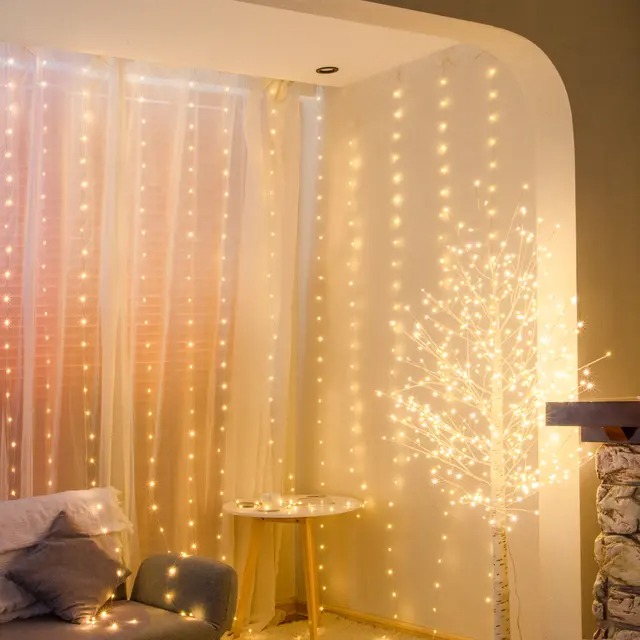
When considering LED vs incandescent holiday lights, sustainability plays an important role. With the growing awareness of environmental issues, many consumers are opting for eco-friendly products, including holiday lights.
Incandescent bulbs are less environmentally friendly due to their high energy consumption and short lifespan. The excessive energy required to operate these lights leads to higher carbon emissions, especially if your electricity comes from fossil fuels. Additionally, the need to replace incandescent bulbs more frequently leads to more waste.
LED lights are far more environmentally friendly. Their lower energy consumption reduces the overall carbon footprint of your holiday displays. The longer lifespan of LEDs also means less waste, as fewer bulbs need to be disposed of over time. For those who prioritize sustainability, LED lights are the better option.
When deciding between LED and incandescent lights, it's also essential to consider the practical aspects of installation, maintenance, and safety.
Incandescent holiday lights are generally easy to install, but they require more maintenance. The bulbs are more fragile and prone to breaking, which means you may need to replace them more frequently. They also generate more heat, which can be a safety concern, particularly when used in close proximity to dry materials like pine needles.
LED lights are more durable and require less maintenance. They are less likely to break or burn out, and they operate at a much lower temperature, reducing the risk of fire. This makes them safer for use both indoors and outdoors.
When it comes to LED vs incandescent holiday lights, the choice ultimately depends on your specific needs and priorities. If you're looking for energy efficiency, long-term cost savings, and environmental sustainability, LED lights are the clear winner. They offer a longer lifespan, use less energy, and require fewer replacements, making them a smart investment over time.
However, if you prefer the warm, traditional glow of incandescent lights and are not as concerned with energy consumption or long-term costs, incandescent lights may still be the right choice for you.
Ultimately, both options can create beautiful holiday displays. By weighing the factors that matter most to you, such as cost, aesthetics, and environmental impact, you can make the best decision for your holiday lighting needs.
1. Are LED holiday lights more expensive than incandescent lights?
Yes, LED lights typically cost more upfront than incandescent lights, but they are much more energy-efficient and have a longer lifespan, resulting in cost savings over time.
2. Can I use LED lights for both indoor and outdoor displays?
Yes, LED lights are versatile and can be used for both indoor and outdoor decorations. They are more durable and resistant to weather conditions than incandescent lights.
3. Do LED lights come in warm white options like incandescent lights?
Yes, many modern LED lights come in various color temperatures, including warm white, which mimics the traditional glow of incandescent lights.
4. Are LED lights safer than incandescent lights?
Yes, LED lights are safer than incandescent lights because they operate at a lower temperature and are less likely to overheat, reducing the risk of fire hazards.


